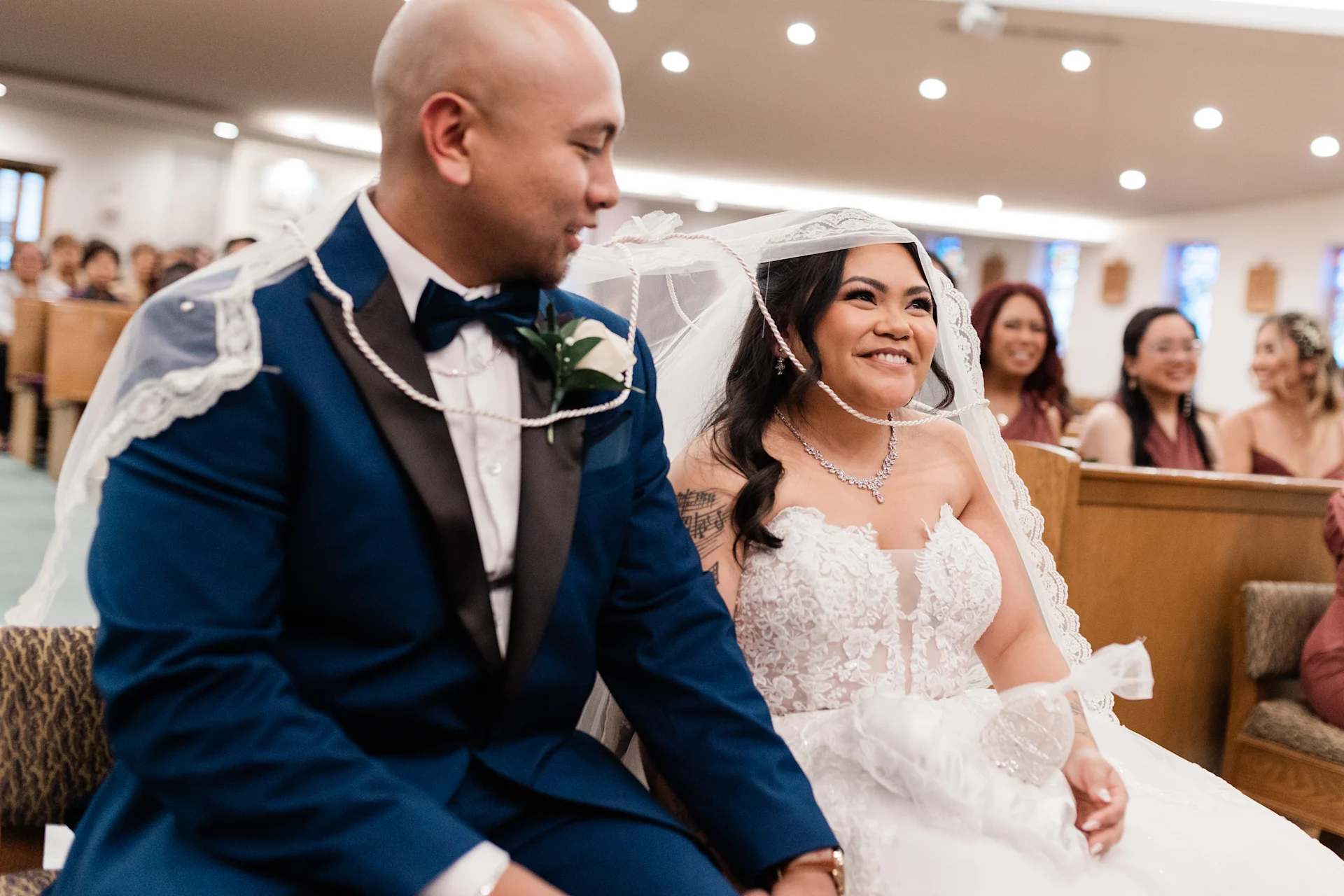
Veil and Cord, Candle and Coin: A Guide to Filipino Wedding Traditions
Luke D. • September 17, 2026
What each ritual means, who your sponsors should be, and how couples today are making these traditions their own.
At a Filipino wedding, you have probably seen the bride and groom presented with coins or the bride's veil draped over the groom's shoulder. As you consider incorporating these rituals on your wedding day, here’s everything you need to know about Filipino wedding ceremonies, from their history and symbolism to practical considerations for your own wedding.
History and Symbolism of the Different Wedding Traditions
Many of these traditions in Filipino weddings originated from Spanish and American colonization. Other traditions also have a Christian basis. These traditions reflect the union between the couple and their families. Filipino wedding traditions were not taken solely from foreign influences, but also blended with indigenous Filipino traditions. Here are some Filipino wedding traditions you may want to incorporate into your wedding.
Coin Ceremony
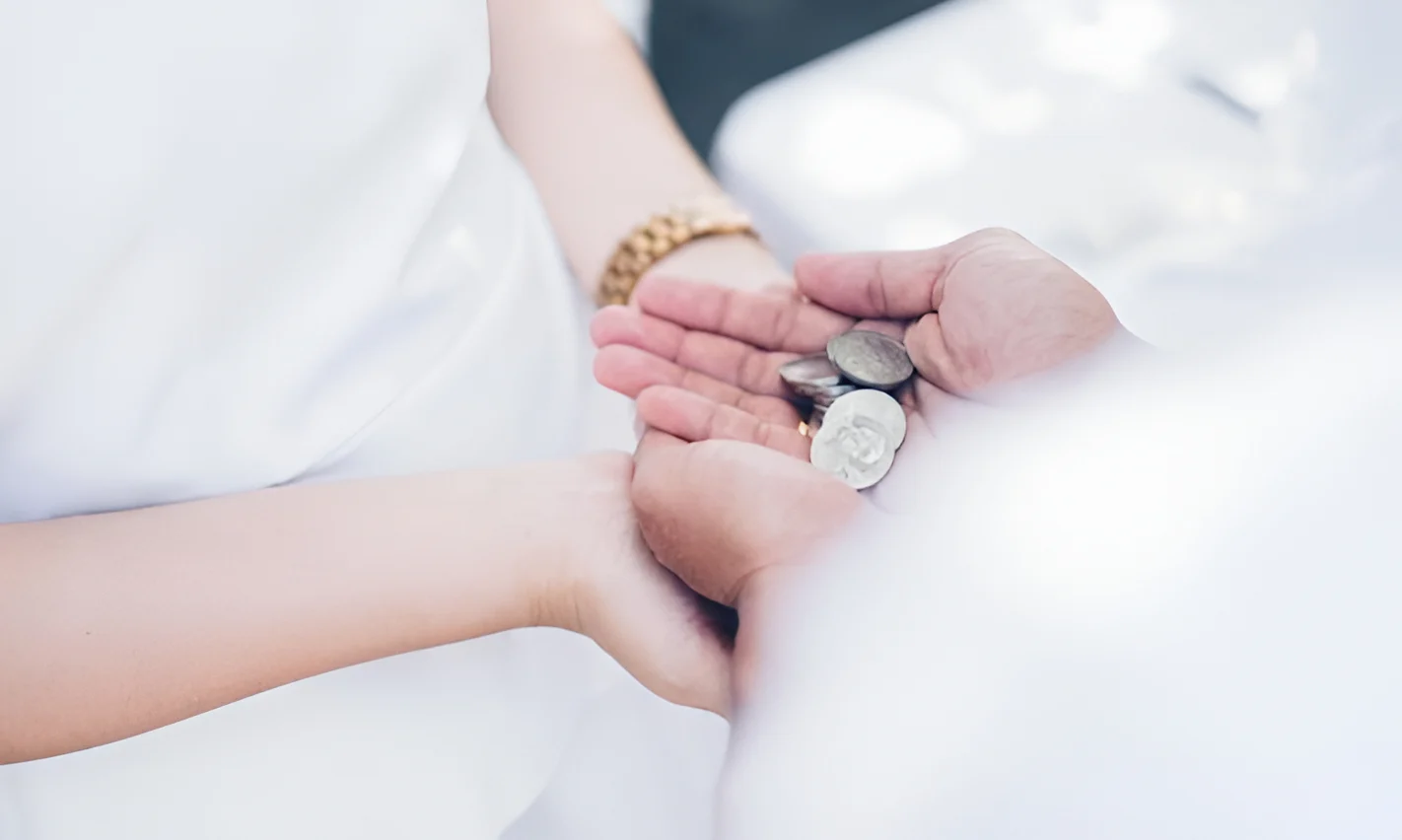
The coin ceremony, or arrhae, comes from the Spanish word arras, or “earnest money.” This ritual can be traced back as far as the 5th century in Spain or even ancient Rome, where the groom would pledge their marriage to their bride with the exchange of gold. The ceremony also holds both cultural and religious meaning. Monetary gifts at special occasions such as weddings are common among many cultures. In this case, the groom's gift of money to the bride represents sharing wealth and a commitment to support each other financially.
The coins themselves also symbolize prosperity. The religious meaning behind the coin ceremony comes from the number of coins. The 13 coins represent Jesus and his 12 disciples. While the religious interpretation of the 13 coins is common, it can also be interpreted as 12 coins representing the 12 months in a year, with the 13th coin representing the pledge to go beyond.
Candle Ceremony
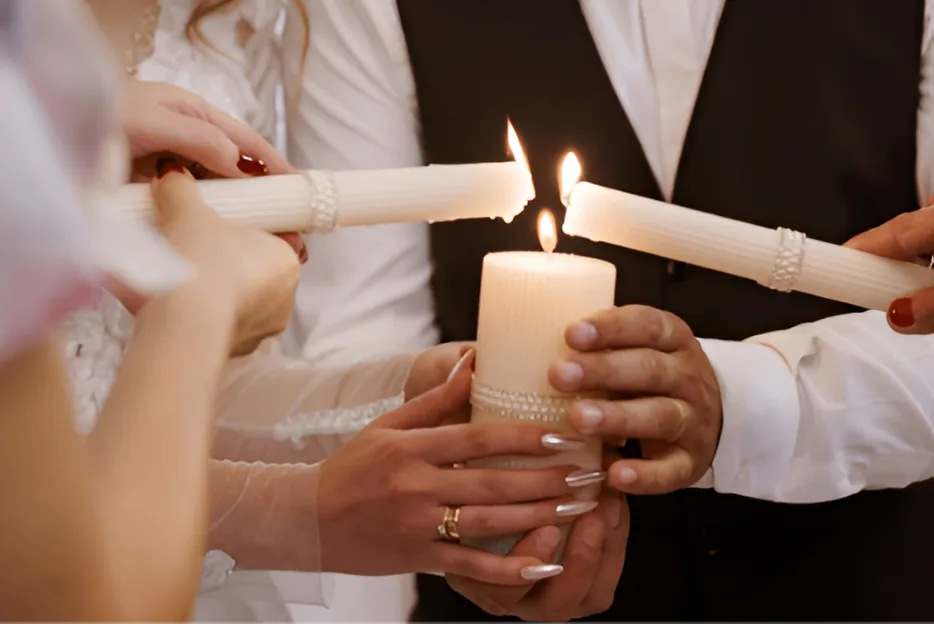
Unlike other rituals with Spanish Catholic origins, the unity candle ceremony traces its origin to American Protestantism. Lighting the candle symbolizes God as part of their union and acknowledges God as part of the couple’s lives. Furthermore, the couple and their respective sponsors lighting the candle together also resembles the fusion of the two families.
Veil and Cord Ceremony
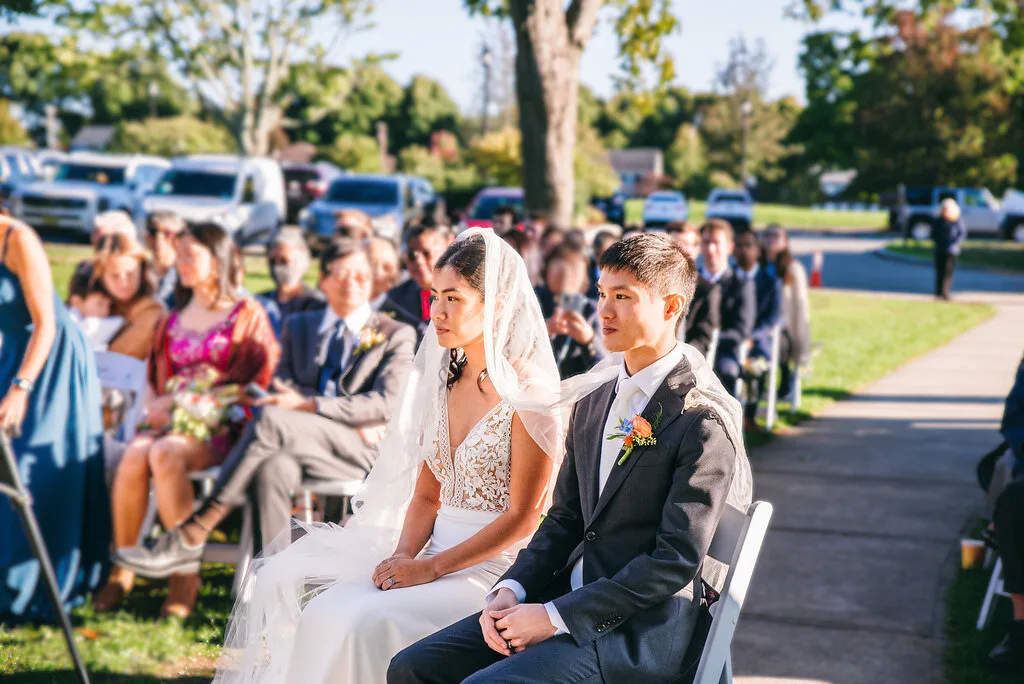
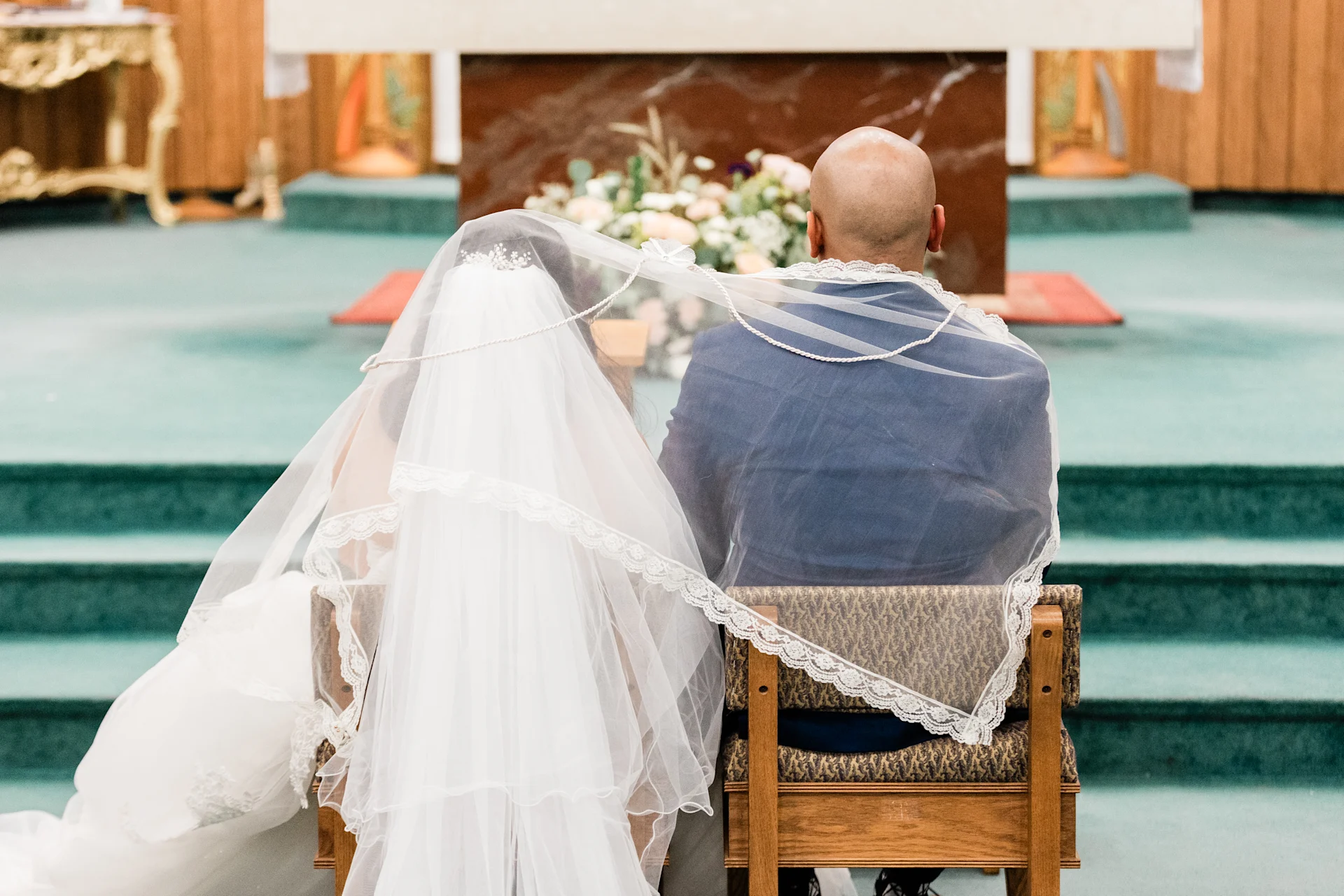
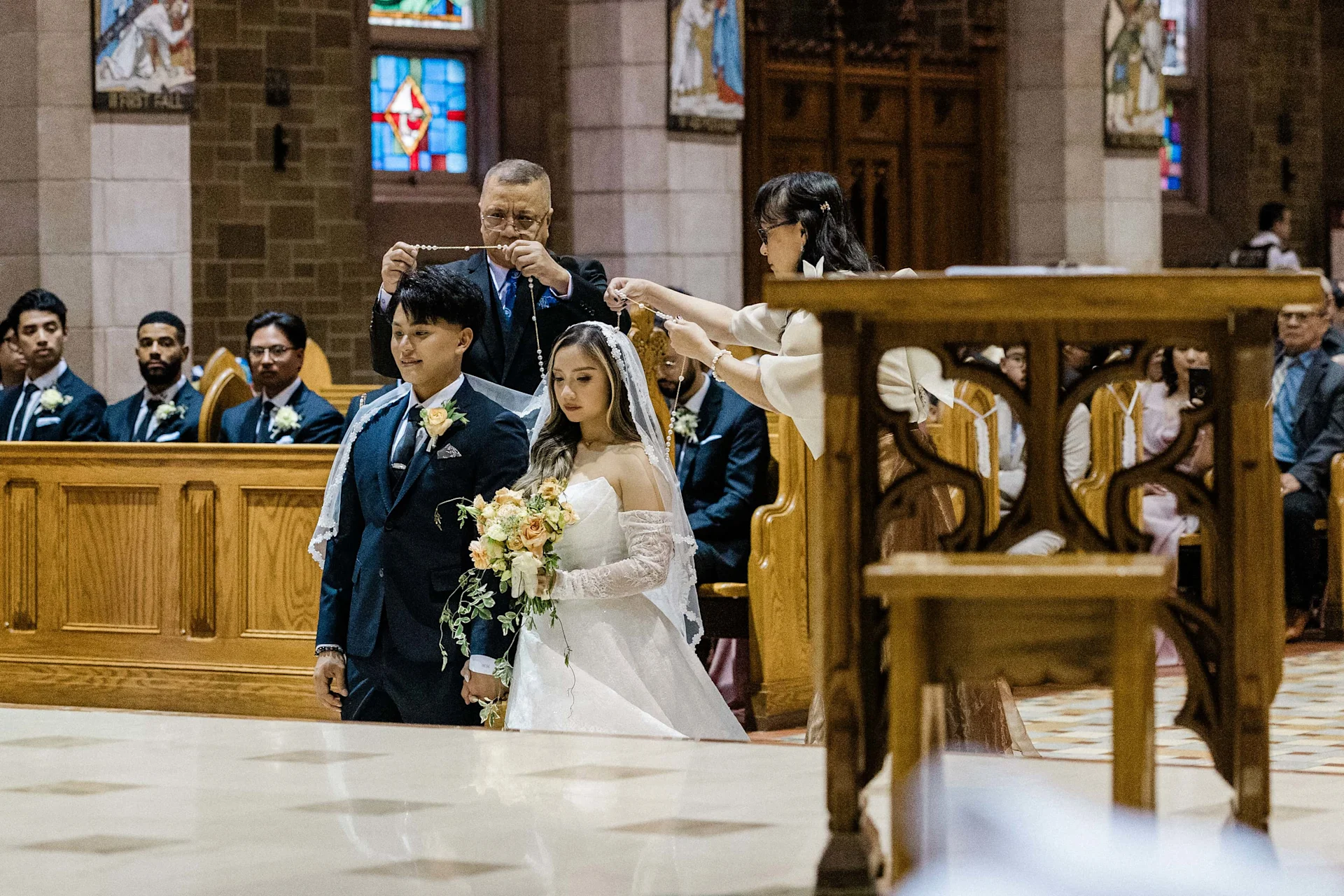
The veil and cord ritual blends both indigenous cultural tradition and Spanish influences. The indigenous tradition can be traced back to early pre-colonial Filipino matrimony ceremonies, with the cord ceremony binding the couple together with their hair, hands, or neck. The cord, or yugal in Tagalog, is placed in a figure-eight because it is associated with luck and resembles the infinity symbol. The cord represents “infinity fertility.”
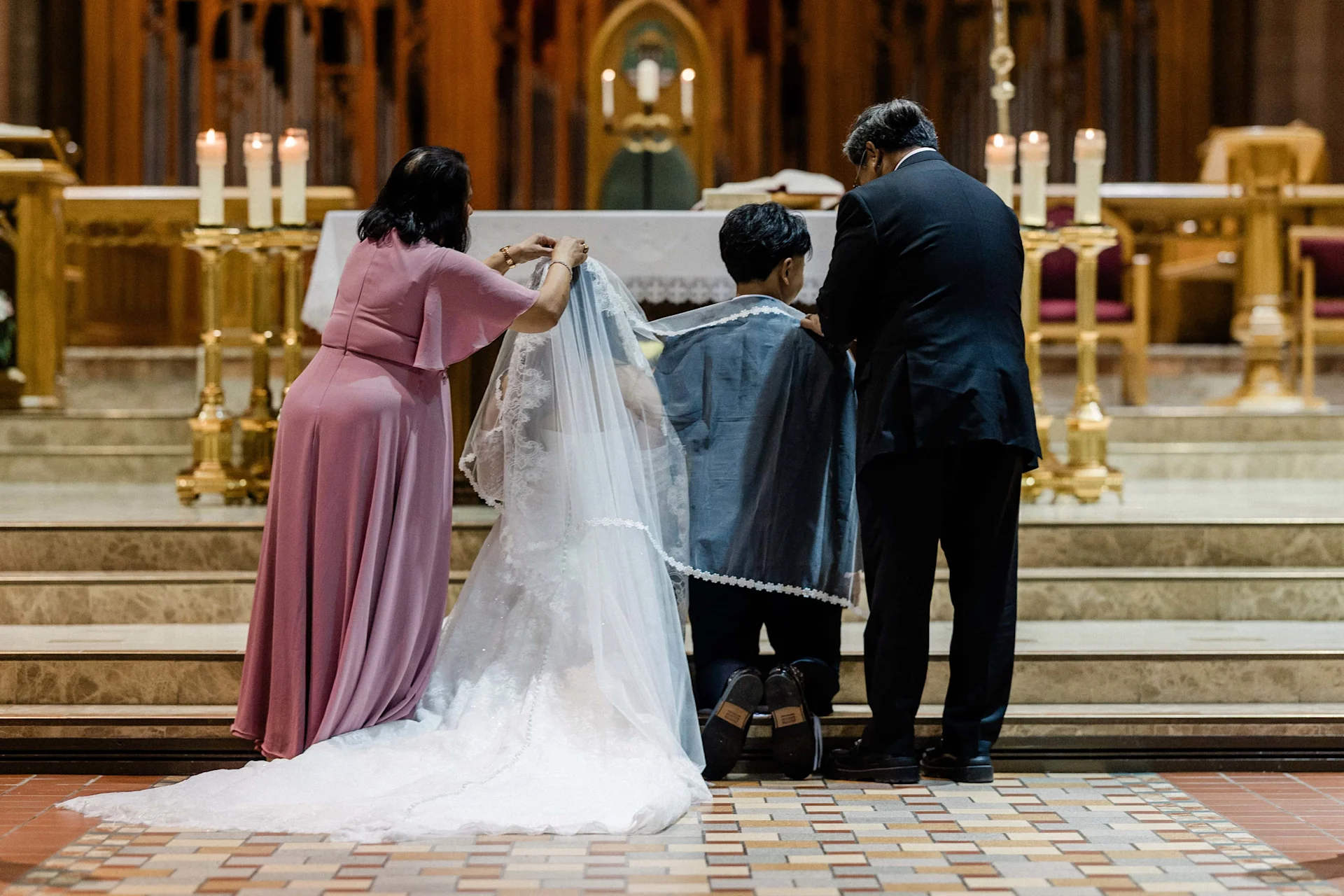
The veil draped over the bride’s head and across the groom’s shoulder symbolizes humility and unity. The draping also signifies the sponsors' blessing of enduring love and commitment between the couple. In some cases, it also carries religious symbolism. In Christianity, the veil represents God and, through the act, his support for the union.
Wedding Sponsors
Filipino culture is very community-focused, so it comes as no surprise that Filipino wedding ceremonies include the couple’s community. This shows up in the form of wedding sponsors, who are chosen by the couple to play an active role in the proceedings. Sponsors are generally split into two groups: principal sponsors and secondary sponsors.
Principal Sponsors
Your principal sponsors are respected adults, usually elders, who legally witness and sign your wedding certificates. Common choices include parents’ close friends, ninongs and ninangs, mentors, or older relatives the couple looks up to. These are the people you trust and admire, and who you’ll go to for advice throughout your marriage. Traditionally, principal sponsors might also give more substantial gifts to help the couple start their life together, though today the honor of being chosen matters far more than the size of the gift.
Secondary Sponsors
Each ceremony may have multiple sets of sponsors for the bride and groom. These sponsors are called secondary sponsors. Your secondary sponsors can be your friends or family whom you hope will be a significant part of your wedding.
Frequently Asked Questions About Filipino Coin, Candle, Veil, and Cord Ceremonies
How do we incorporate Filipino ceremonies into our Catholic wedding?
The coin, candle, veil and cord ceremonies are typically incorporated after the vows and ring exchange of a Catholic Mass. Priests outside of the Philippines may not be familiar with the ceremonies, but they often are open to including them. They might ask you to prepare a script or resources to help educate them.
Some of your guests may be unfamiliar with the Filipino ceremonies. If you’d like, you can include a brief explanation of the ceremony in your wedding program, explaining the significance and symbolism that they’re witnessing.
Can we include the ceremonies in a non-denominational or non-religious wedding?
Yes! Though the ceremonies are traditionally part of a Catholic wedding, they can also be incorporated into non-denominational or non-religious weddings. Usually this means adding the Filipino ceremonies after vows and rings, while adapting the symbolism to your own beliefs. This can be a beautiful way to stay in touch with your culture on your own terms. (Disclaimer: we can’t speak to how traditional your family is!)
Do we need to follow the traditional gender roles of the ceremonies?
Traditionally, the veil, cord, and coin ceremonies carry distinct roles for the bride and groom (like the groom presenting coins to symbolize his promise to provide). But plenty of modern couples are updating these roles to better reflect their own relationship: exchanging coins with each other instead of one-directional giving, draping the veil over both partners rather than just the bride, and so on. You can adjust the officiant script or wording in your wedding program to make the ceremonies feel authentically yours.
Where do we buy the coins, veil and cord?
If someone in your family already owns the ceremony materials, it can be meaningful to reuse them in your own ceremonies. Otherwise, several online shops sell Filipino wedding accessories. These shops also sell Barong Tagalogs and other wedding materials such as cords, veils, and coins. Some online shops include Barongs R Us, MyBarong, or The Wedding Library.
Do we really need so many principal and secondary sponsors?
Traditional Filipino weddings might have dozens of sponsors, with several principal sponsors and a different set of secondary sponsors for every ceremony. However, there are many ways to downsize on your sponsor number. For instance, the same pair of secondary sponsors can assist you for every ceremony. Or, you can combine principal and secondary sponsor duties
How do we find a photographer who understands these traditions?
If your photographer hasn't shot a Filipino wedding before, that's okay. Walk them through the order of ceremonies ahead of time, or share a shot list. Many photographers are happy to prepare once they know what to expect.
That said, we're big believers in supporting Asian-owned businesses, and a Filipino photographer will often already understand the significance of these moments without needing it explained. Photographers featured in this post include Toronto photographer Amanda Soriano and Alberta team Timeless Tales Creatives. Both are wonderful options if you’re looking for a photographer who understands Filipino wedding traditions.
References
https://en.wikipedia.org/wiki/Marriage_and_wedding_customs_in_the_Philippines
https://www.josemelgarejo.com/filipino-wedding-traditions/
https://elsker.app/traditions/filipino
https://www.filipinowedding.com/pages/filipino-wedding-traditions
https://eventnest.ph/blog/principal-sponsors-ninong-ninang-how-many-how-to-ask-what-they-really-do/
Explore More Resources for the Asian Diaspora
We're excited to bring you blog posts that highlight the richness of the Asian Diaspora. We aim to create a space where you can find inspiration, tips, and stories that resonate with your unique experiences.
If you're in search of a makeup artist for your own wedding, we also have a directory of talented makeup artists who are experienced with Asian features. We hope it makes your wedding planning journey a little easier!
Find a Makeup Artist