Mooncakes 101: Legends, Varieties, and the Great Yolk Debate
Luke D. • September 25, 2026
Learn the legends behind mooncakes and explore different regional varieties of the cherished pastry
With the Mid-Autumn Festival coming up, it’s officially mooncake season! Also known as the Mooncake Festival, it’s a night for gathering with family, admiring the fullest moon of the year, and eating the dense pastries cherished for generations. Below, we’re sharing a brief history of mooncakes, a tour of mooncake styles from around Asia, and our objectively correct rankings of the best flavors.
History and Symbolism of Mooncakes
The Mid-Autumn Festival is the 15th day of the 8th lunar month, which lands on Friday, September 25 this year. But how did mooncakes become the culinary star (or moon?) of the show?
According to legend, the ancient predecessors of mooncakes were eaten in appreciation of a person, not the moon. During the Shang and Zhou Dynasties, over 3,000 years ago, Taishi cakes, the ancestor of mooncakes, were eaten to commemorate Wenzhong, who was a high-ranking official and adviser to the emperor.
By the Han Dynasty, trade with the West brought sesame seeds and walnuts to China. The new ingredients made their way into fillings that transformed the traditional Taishi cakes into a new filled “Hu cake.”
Through various legends, the cake became connected to the moon and Mid-Autumn Festival.
One story says that during the Tang Dynasty, the Emperor celebrated a military victory against the northern tribes on the 15th day of the eighth lunar month. A Tibetan trader offered the Emperor a round Hu cake at the celebration, and the cakes became a popular treat for the season.
Another traditional folktale connecting the cakes to the Mid-Autumn Festival is set during the Yuan Dynasty, during the Mongol occupation of China. According to legend, rebel leader Zhu Yuanzhang and his strategist devised a plan to overthrow the Mongols by uniting rebel groups and sending a secret message: attack on the night of the Mid-Autumn Festival. And where did they hide the secret message? Through mooncakes, of course!
Whichever story you believe, by the Ming and Qing Dynasties, the pairing was official: mooncakes, made with flour, nuts, sugar, and lard, were the food of the Mid-Autumn Festival. The round shape now stands for the full moon and for togetherness, which is why families still share one today, even with relatives far away.
Different Types of Mooncakes
Since their origins in China, mooncakes have evolved and spread around Asia, with different variations of fillings and crusts.
Cantonese-style
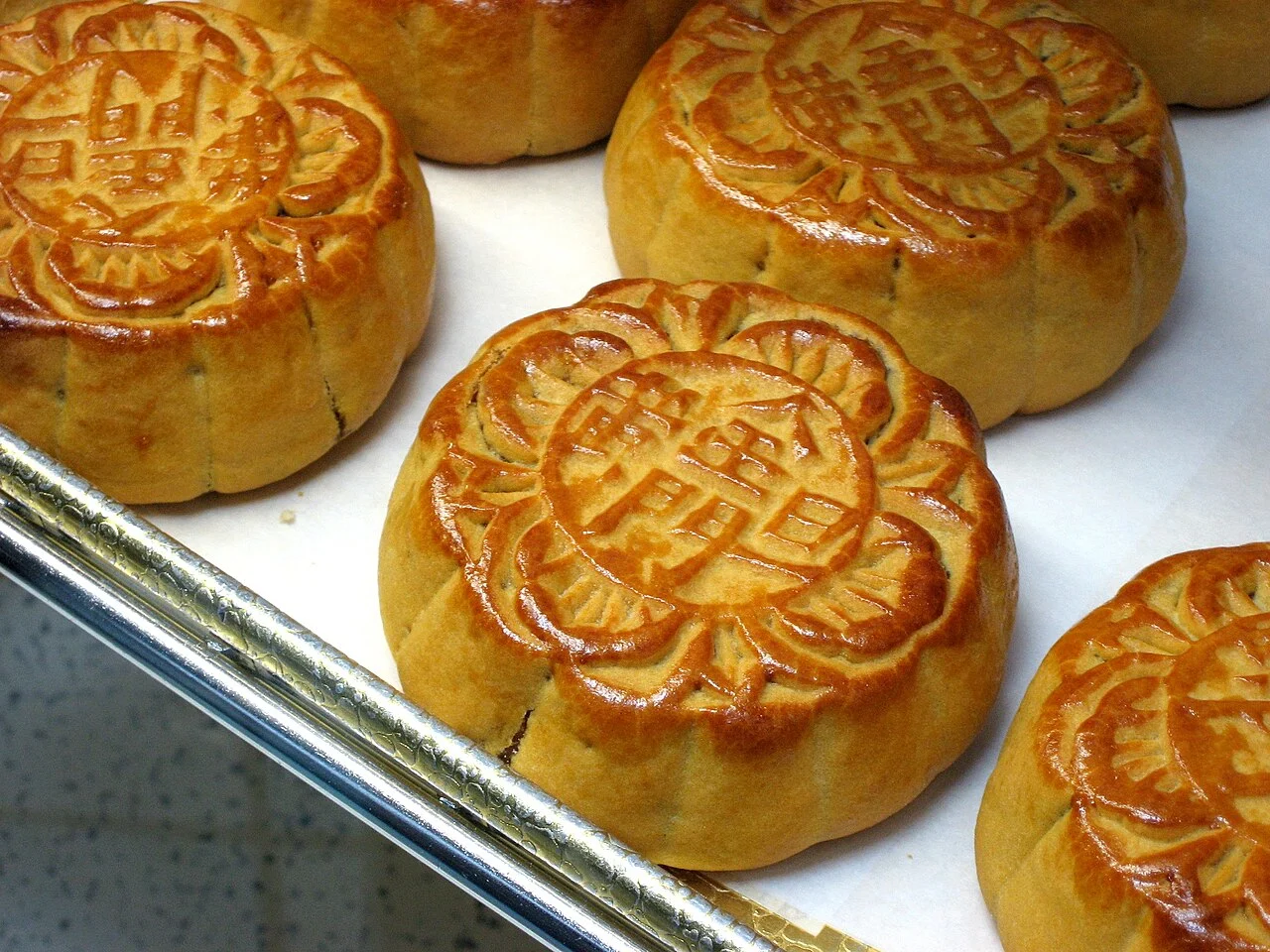
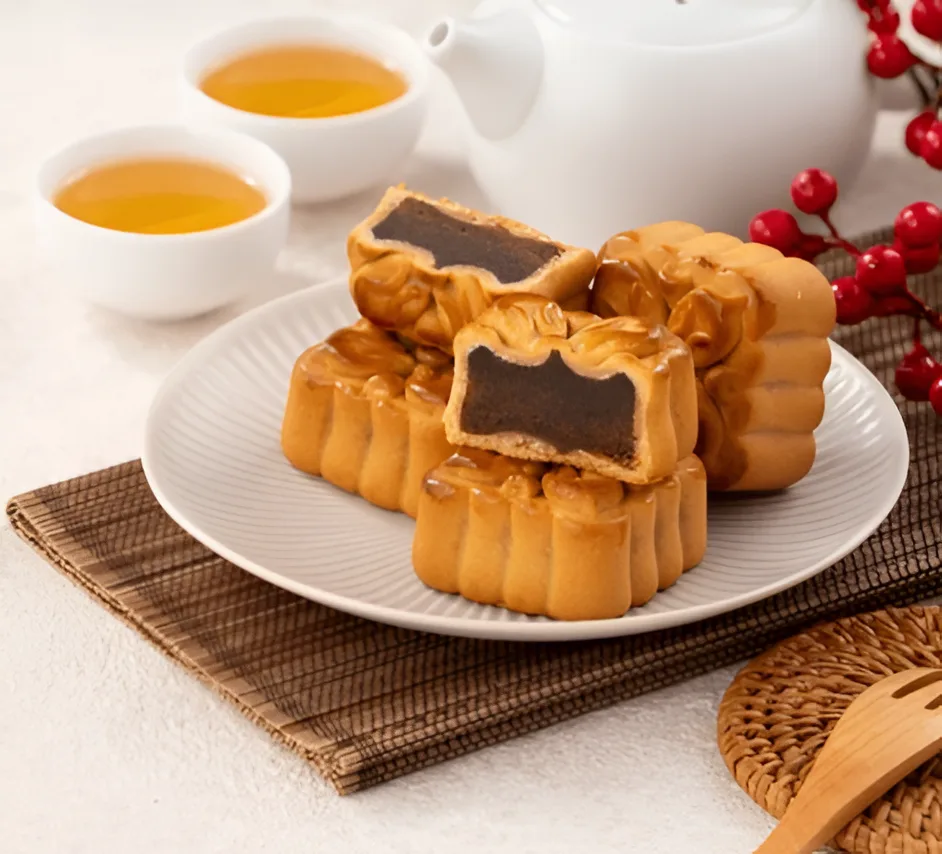
Cantonese-style mooncakes are the most common mooncakes. They are usually filled with lotus seed paste, melon seed paste, nuts, ham, chicken, duck, roast pork, mushrooms, and egg yolks. Some Cantonese-style mooncakes have four egg yolks to represent the four phases of the moon.
Beijing-style
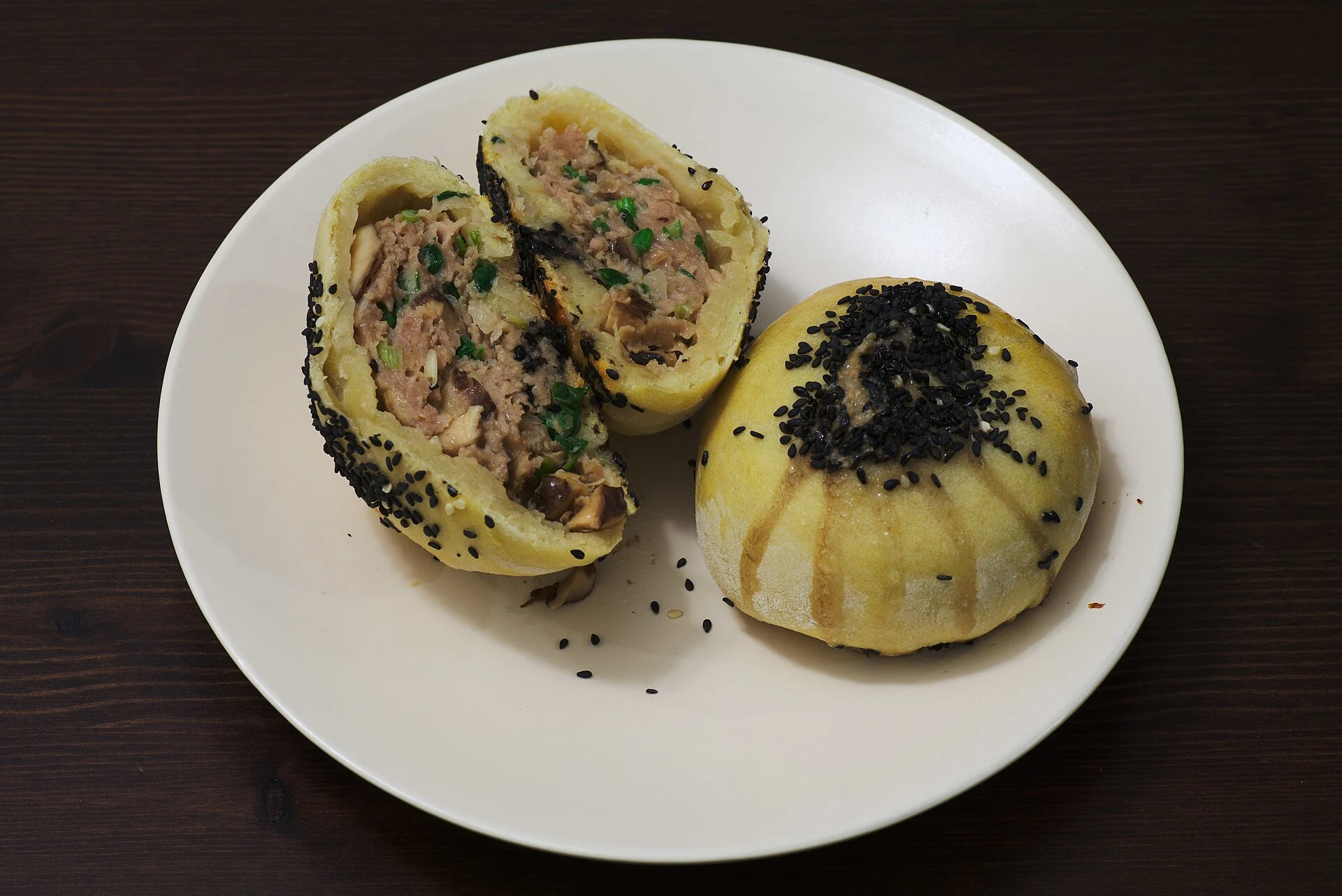
Beijing has two styles of mooncakes. One style uses a light and airy dough, while the other uses a flaky and white dough.
Shanghai-style
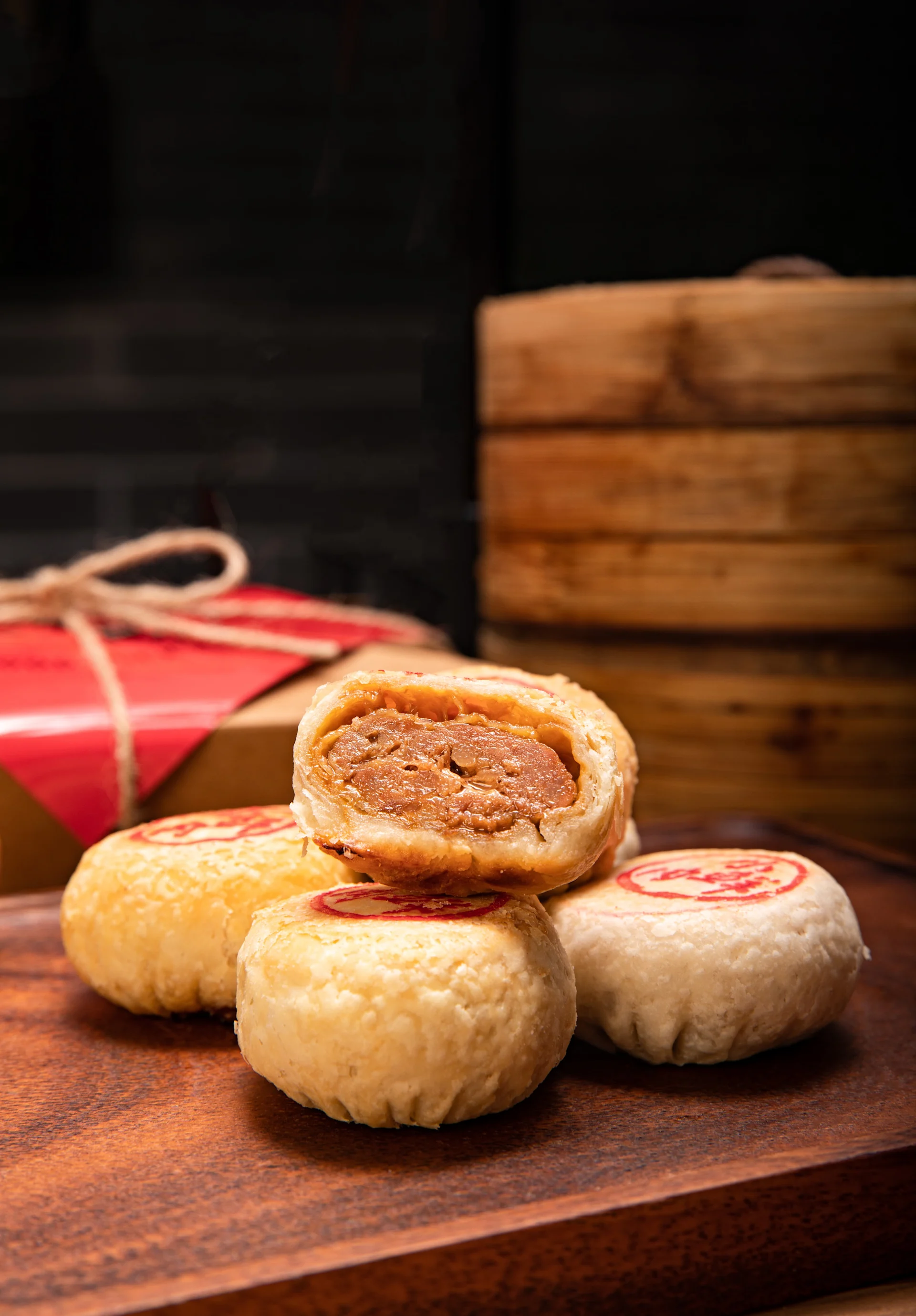
Shanghai-style mooncakes have a shortcrust, buttery, and flaky dough. Shanghai mooncakes are filled with sweetened red bean paste, lotus seed paste, and taro paste with egg yolks.
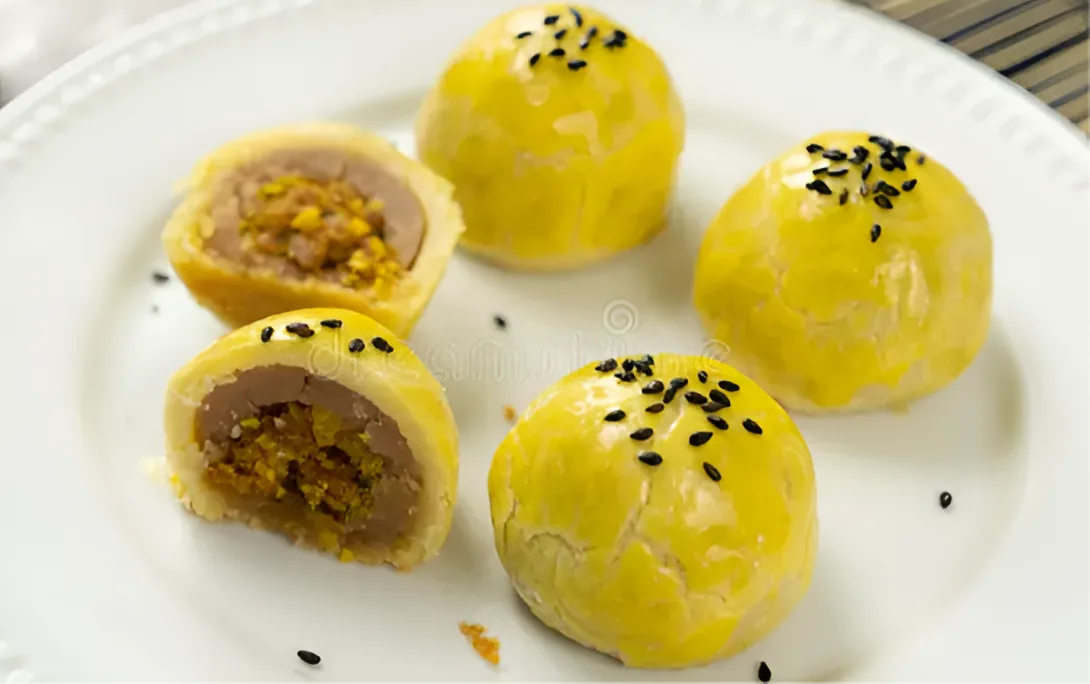
Vietnamese-style
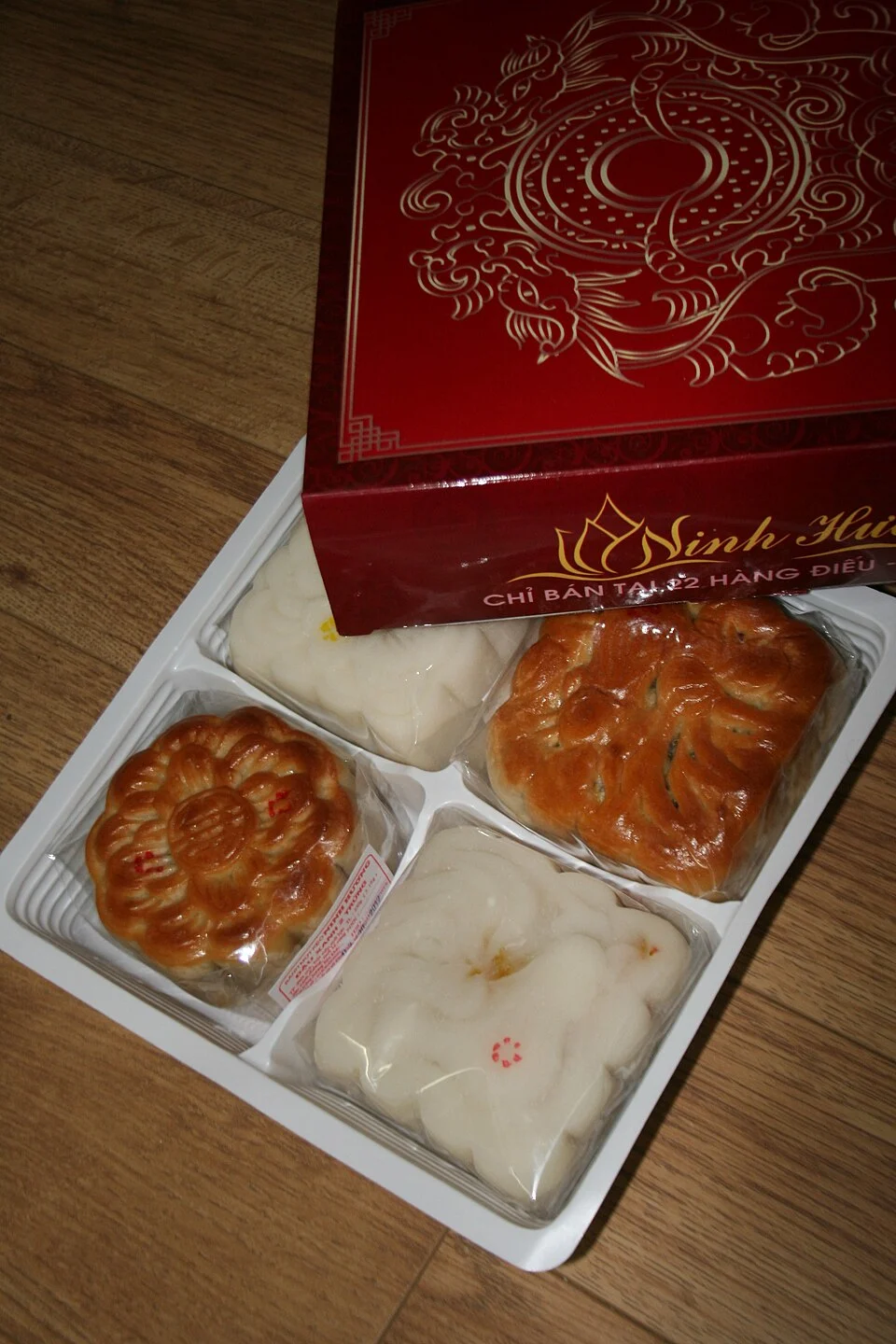
There are two kinds of Vietnamese mooncakes, also known as bánh trung thu, or “mid-autumn cake.” Bánh nướng is a baked mooncake made out of wheat flour, cooking oil, and boiled syrup. Bánh dẻo is a sticky rice mooncake that is made from roasted glutinous rice flour, pomelo blossom water, and syrup. Vietnamese mooncakes are usually filled with mung bean paste and salted egg yolk.
The Great Yolk Debate
We couldn’t write this post without acknowledging the important question: yolk or no yolk? The bright golden yolk in a mooncake symbolizes the moon, but when it comes to eating it, we’re divided. Half of our team loves the addition of a salted yolk, drawn to the rich, salty contrast against a sweet lotus paste. The other half prefers a plain red bean or lotus paste filling without a yolk.
However you like your mooncakes, we hope you get to share one with people you love during the Mid-Autumn Festival.
Explore More Resources for the Asian Diaspora
We're excited to bring you blog posts that highlight the richness of the Asian Diaspora. We aim to create a space where you can find inspiration, tips, and stories that resonate with your unique experiences.
If you're in search of a makeup artist for your own wedding, we also have a directory of talented makeup artists who are experienced with Asian features. We hope it makes your wedding planning journey a little easier!
Find a Makeup Artist